

Wahl-Eversharp prototype Snorkel-Piston filler
One of my best flea market finds! From the load of odd parts and pens found from Herb Anders, Wahl toolmaker estate.
After a few weeks of sorting and studying the many boxes of parts, rods, samples and records it became clear that besides some red hard rubber Greek Key pattern pens, pencils, Skylines and Fifth Avenues, lots of c1920’s parts, some were early 1940’s and 1950's tool shop prototypes. These were likely fashioned by the deceased tool maker Herbert Anders who was experimenting on the next generation of Wahl pens. The hand made prototypes and experimental parts found included a Fifth Avenue style piston-operated snorkel, a Parker 61-style self filler, ink cartridge fountain pens, experimental ballpoint refills that were coiled, folded, etc., and a hand made Lifetime conical style 14K nib which is now in John Mottishaw’s collection.
I concluded that most of these parts were a snapshot of many parts used by Eversharp’s experimental efforts from the mid-1940’s to the early 1950’s. This was a time when Eversharp was struggling to present new pen products and enter the ballpoint market to compete with Sheaffer’s Stratowriter and Reynold’s Rocket ballpoints. The Sheaffer’s Touchdown snorkel filler was introduced in September, 1952 and Parker’s 61 was introduced in September, 1956.
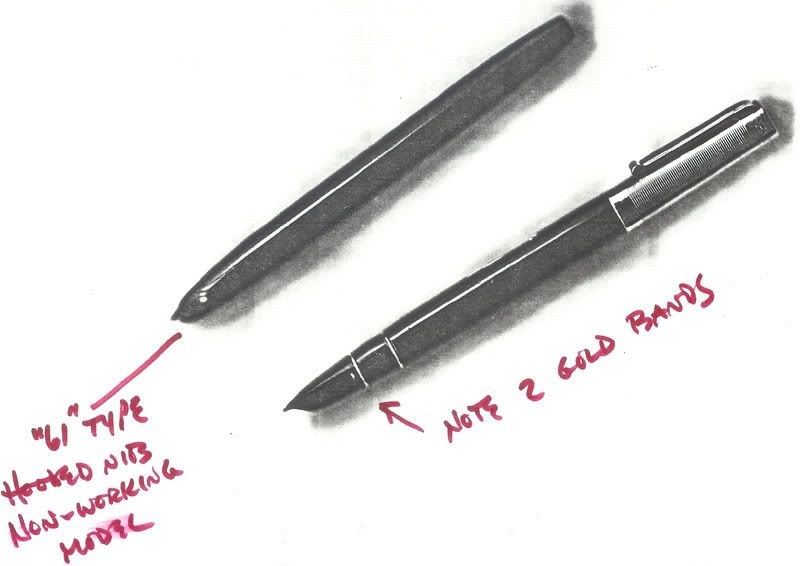
The Eversharp “61” and Fifth Avenue prototypes. (Len Provisor)
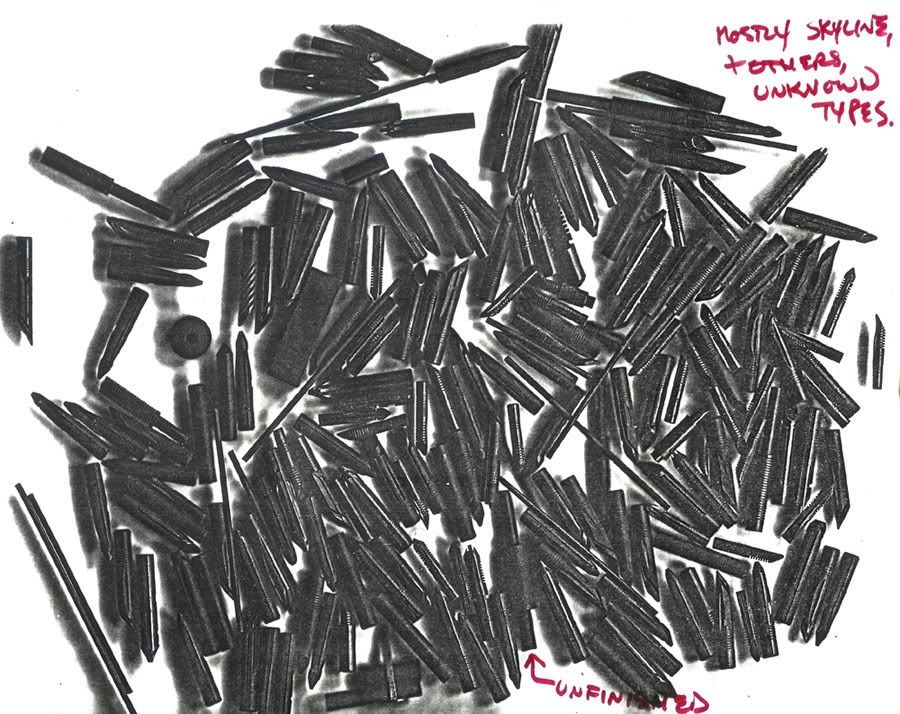
Nibs and feeds from the Herb Anders parts. (Len Provisor)
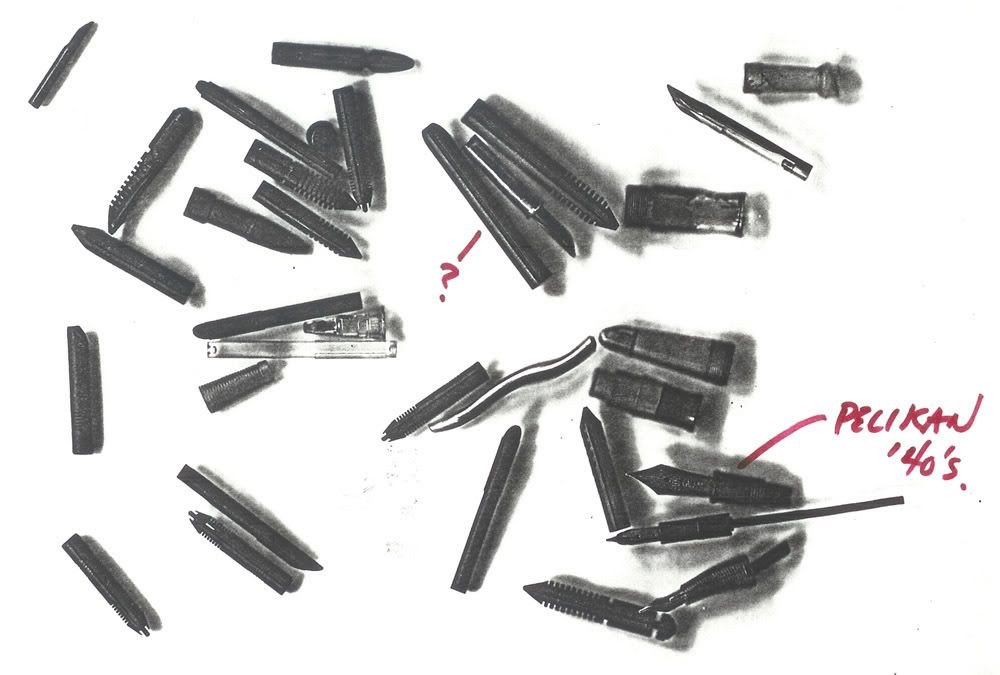
Loose parts, including a 1940s Pelikan. (Len Provisor)
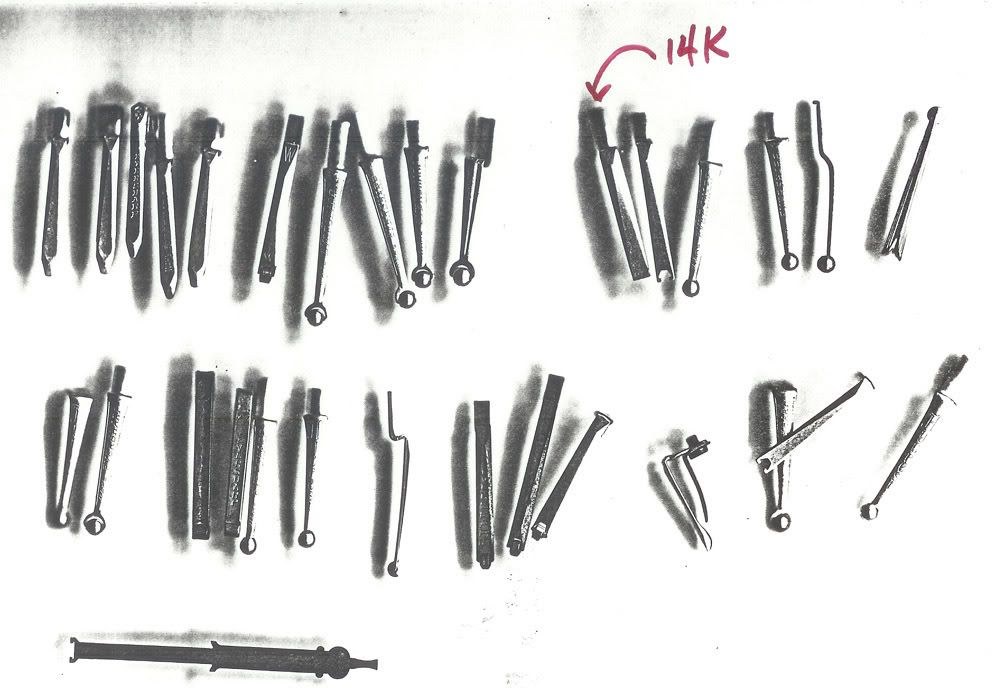
Prototype parts and a diamond-tipped dressing tool. (Len Provisor)
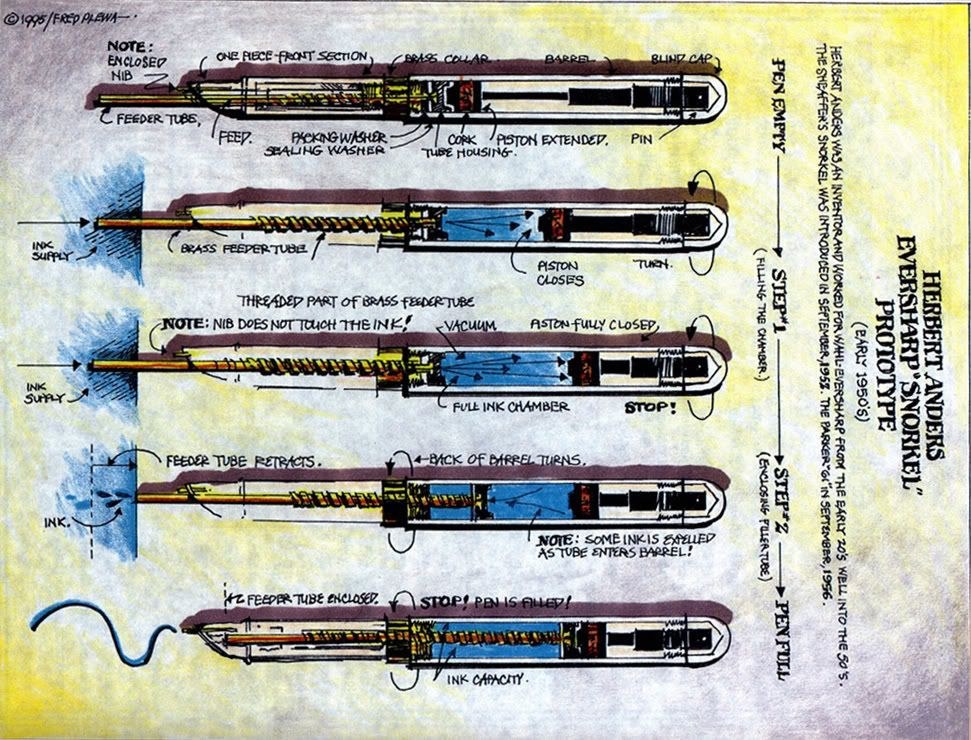
Herbert Anders’ Eversharp Snorkel prototype, early 1950s: how it fills. (© 1995 Fred Plewa)
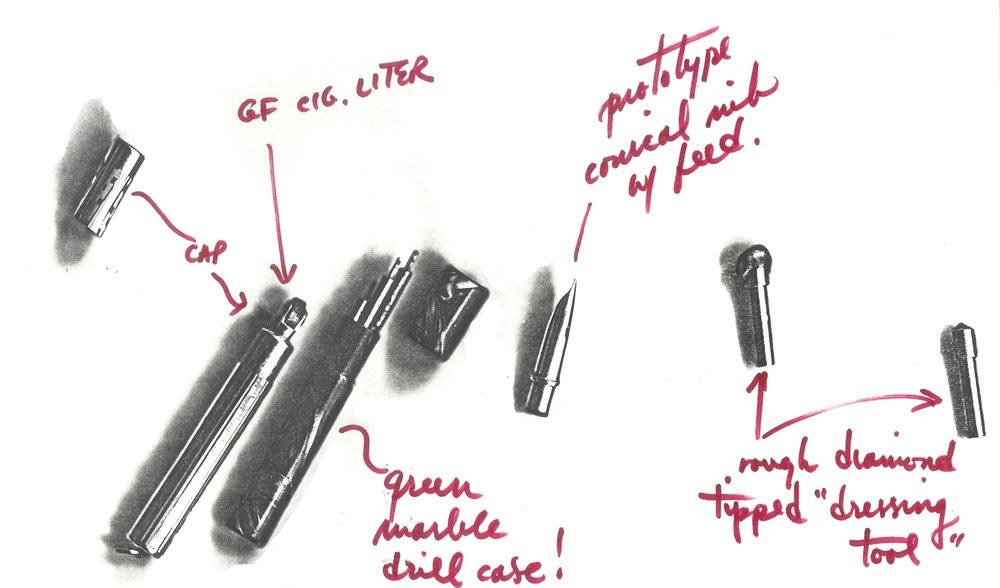
A prototype conical nib, a gold-filled cigarette lighter and a green marble drill case. (Len Provisor)
The remnant parts I had in my hands were prototype filling designs very similar to the Touchdown and the Parker 61 capillary filler. Eversharp’s version of a snorkel may have been an improvement which combined the extension and retraction of the filler tube below the nib with a piston mechanism which evacuated the ink chamber and allowed air pressure to force ink into the pen barrel. The Eversharp “61” versions included a closed barrel with supposedly ink aspiration from the nib end, very similar to an early Parker 61 prototype. This tells me they somehow got their hands on one, not unusual as pen companies often bought competitive products for study and were trying to retro-engineer the mechanism. Another prototype, shown below, was the nib, feed and a capillary ink collector tube very similar to the 61 design.
The image below shows the top two models as the 61 version.
The Eversharp “61”-style prototypes, top two. (Len Provisor)
The next two images show the piston-driven snorkel model. The filling tube (snorkel) is extended when the barrel is rotated. A knob on the end of the barrel moves the piston. When the knob is counter-rotated, the piston travels back up the barrel drawing ink into the pen. The barrel must be counter-rotated to withdraw the snorkel tube back under the nib and into the feed. This test model is made in clear Lucite, it appeared solid and comfortable but was never produced or marketed.
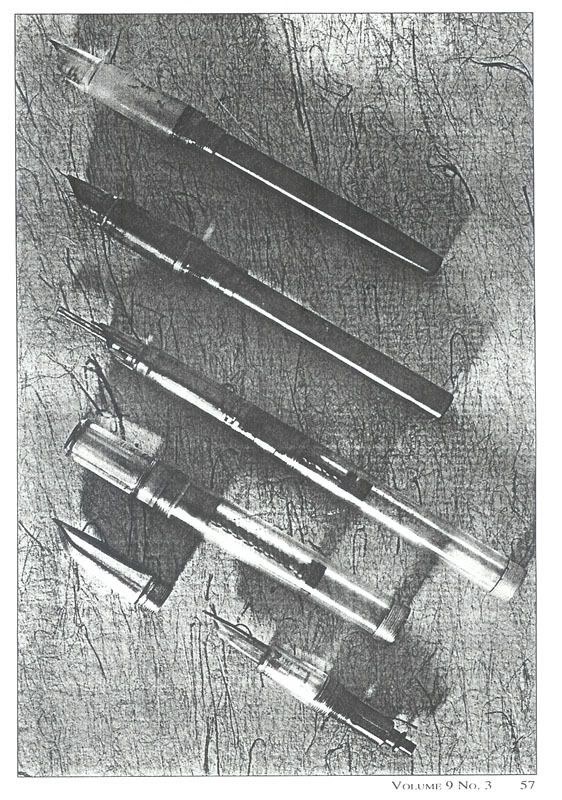
The Lucite piston-driven Snorkel prototype. (Len Provisor; Volume 9, No. 3, page 57)
The prototype Snorkel filling in five steps. (© 1995 Fred Plewa)
This article originally appeared in PCA Pennant magazine in 2019.