

Topic of the Week: Filling Systems
One of an occasional series that spotlights one part of the Pentrace archive for readers who haven't explored the whole site yet.
How does the ink get in? Before the cartridge, pen makers spent decades inventing answers: eyedroppers and safeties, sacs squeezed by levers, buttons, coins and crescents, pistons, vacuum diaphragms and Sheaffer's Snorkel. Each one has its own habits and its own ways of going wrong. Pentrace's writers have described most of them, inside and out, and this page gathers it in one place.
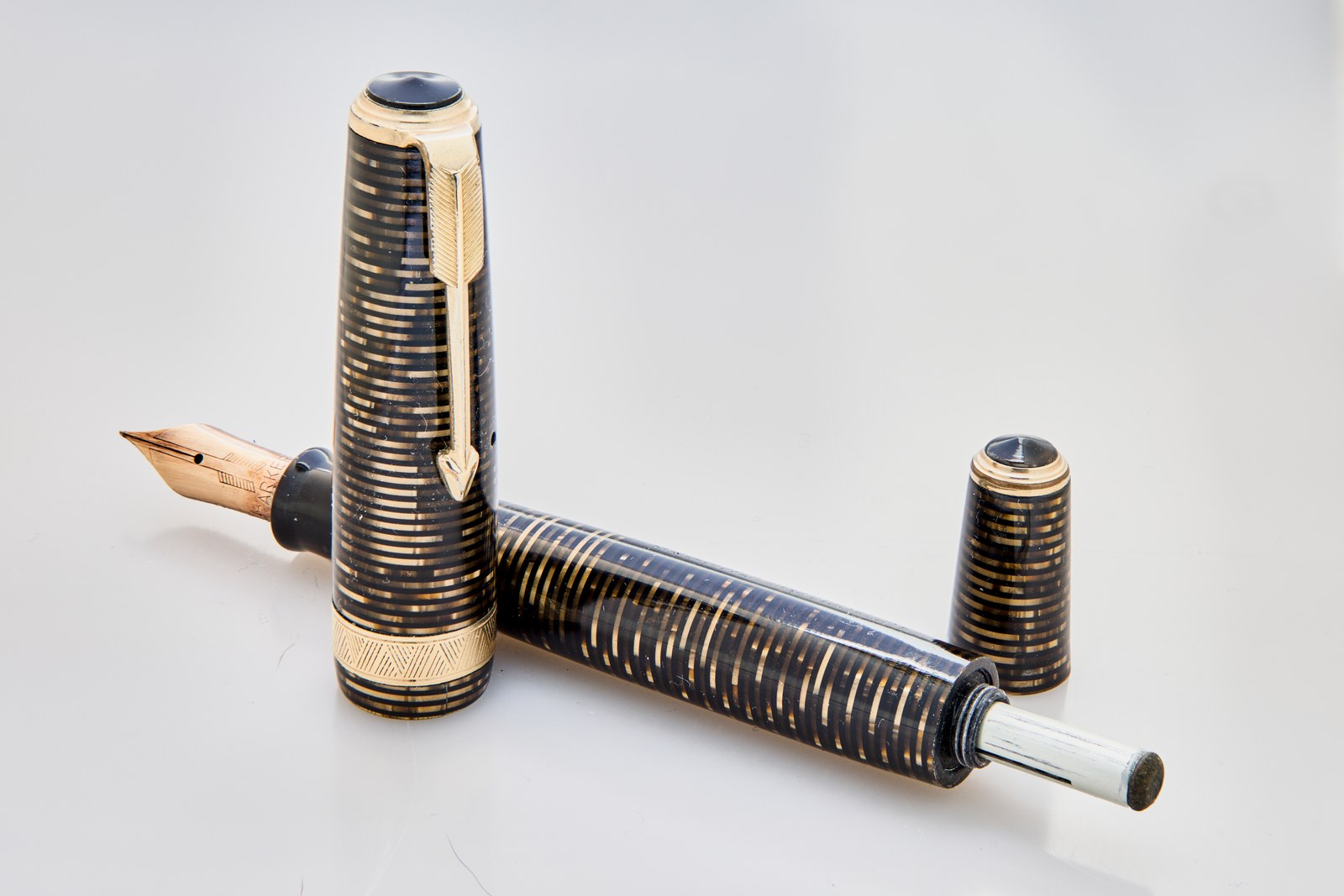
A Parker Vacumatic with the Speedline filler (1937–1941). (Photo: Donal Higgins, private collection)
Start here
If you only read a few of these, start with the following:
- How do I fill my fountain pen?
- Burt Janz’s plain answer to the first question every new pen owner asks: cartridges, converters and the other ways a pen takes in ink.
- The 50+ Fountain Pen Filler Types
- A list of more than 50 filler types and the companies that made them, from accordion sacs to the Snorkel. It leans toward American pens, and says so.
- Vintage Filling Mechanisms - Sac Fillers Part 1
- Silviu follows the eyedropper to the sac fillers: crescent, sleeve, coin and twist fillers, with photographs of the insides. Part 2 covers the lever, hatchet and button fillers.
- Anatomy of a Fountain Pen I: A Typical Lever Filler
- Richard Binder names every part of a lever filler, so you know what you are looking at before you open one.
- Anatomy of a Fountain Pen III: Sheaffer’s Snorkel
- Richard Binder on Sheaffer’s Snorkel of 1952, which he calls the most complicated fountain pen ever designed.
Every article on filling systems
Everything in the archive on this topic, grouped by section:
Technical
- The 50+ Fountain Pen Filler Types
- Vintage Filling Mechanisms - Safeties
- Vintage Filling Mechanisms - Sac Fillers Part 1
- Vintage Filling Mechanisms - Sac Fillers Part 2
- Anatomy of a Fountain Pen I: A Typical Lever Filler
- Anatomy of a Fountain Pen II: The Parker Vacumatic
- Anatomy of a Fountain Pen III: Sheaffer’s Snorkel
- How to Replace a Fountain Pen Sac
Pen Identification
FAQ
Reference Pages
Repair
Pen Doctor
- Pen Doctor: Help for a Sheaffer Touchdown, Why Does My "51" Leak?, I Want a Flex Nib, and I Want It Now!
- Pen Doctor: Rattling Lever in Sheaffer Pen, Converter Interchangeability?, Pelikan Nib Skips — Easy to Fix? and Tightening a “51” Clip
- Pen Doctor: Vintage Aurora Flow Trouble, Fixing a Pelikan Piston? and Nib Tines That Won’t Stay Aligned
- Pen Doctor: The Other Vacumatic Tool
- Pen Doctor: Finding cartridges for a Waterman CF and Getting Dried Ink Out of Caps
- Pen Doctor: Sacs Size and Ink Blots, and Brand-New Nibs That Aren't Smooth
- Pen Doctor: Lockdown Vacumatic Dumps Ink When Filled & Mitigating a nib that catches
- PenDoctor: Stiff Piston in a Stipula 22
New Site Archive (2014-2022)
- Hump Fill Pens
- A Story of Two Pens: The Postal Reservoir Pen, Old and New
- Necessity Ignites Invention: A Review of the FILCAO Atlantica, a Chilton Pneumatic Filler
- The CONID Bulkfiller
- The TWSBI Eco Pen
- OMAS CS Piston Repair
Looking for something this list doesn't cover? Browse all pages.