Pelikan Advertising in the Air and on the Wall
In 1928 Pelikan put its name on the wings of a Klemm L20 powered glider. Len Provisor tracks it down through an old book and a postcard sent from Pelikan’s own factory, then turns to the company’s poster art. First posted on the Pentrace message board in 2008.
One of my side interests in the fountain pen collecting hobby is the aircraft and advertising vehicles used by various pen manufacturers. I have documented all of the Parker Pen Co. aircraft and made replica models of them, from 1928 to the 1960s.
Many years ago I saw a grainy halftone image of a 1928 Pelikan advertising aircraft in a pen collecting book, Collecting Writing Instruments by Dietmar Geyer (Schiffer Publishing, 1990).
I started to search for information by writing to Pelikan, several times, but never received a reply. I was interested not only because of the fountain pen connection, but also because this aircraft was a powered glider, sometimes used as a trainer for pilots, and my father was also a glider pilot and Flight Officer Trainer in the RCAF (Royal Canadian Air Force) in World War II.
As best I could determine, the decoration on this aircraft has the post-1924 logo design on the side of the fuselage, with lettering below that may be simply Günther Wagner · Hannover. Little did I know that there really was a closer connection to me than I thought.
The Klemm L20
The L20 was the first successful Klemm aircraft to be produced in series. The initial prototypes were equipped with Harley-Davidson motorcycle engines, as well as with Daimler F6902 and F46756 engines, and test flights in glider versions were also performed with the prototypes. The center wing section and fuselage had a fixed connection, while the outer wings could be mounted to the center wing section with four screws. The tail unit could also be separated from the fuselage for easier transport on the ground.
Coincidentally, Parker took to the air at the same time, in December 1928, with its Fairchild FC-2 monoplane called the Duofold. The Pelikan Klemm L20 was purchased in June 1928, and both aircraft had significant aviation flight records.
My friend Dieter Kuhse provided me with some technical information on the Pelikan aircraft:
| Engine | Daimler F7502 |
| Registered | June 1928 |
| Owner | Günther Wagner |
| Sold | 1930 |
| May 1932 | “Sturmvogel,” Berlin |
| December 1933 | DLV Ortsgruppe Bernburg |
| Fate | No information after 1939 |
Besides piloted Pelikan balloons and decorated automobiles, the Pelikan Klemm L20 powered glider must have brought the company considerable attention, much the same as the famous 1924 Montblanc LVG C VI Doppeldecker (biplane).
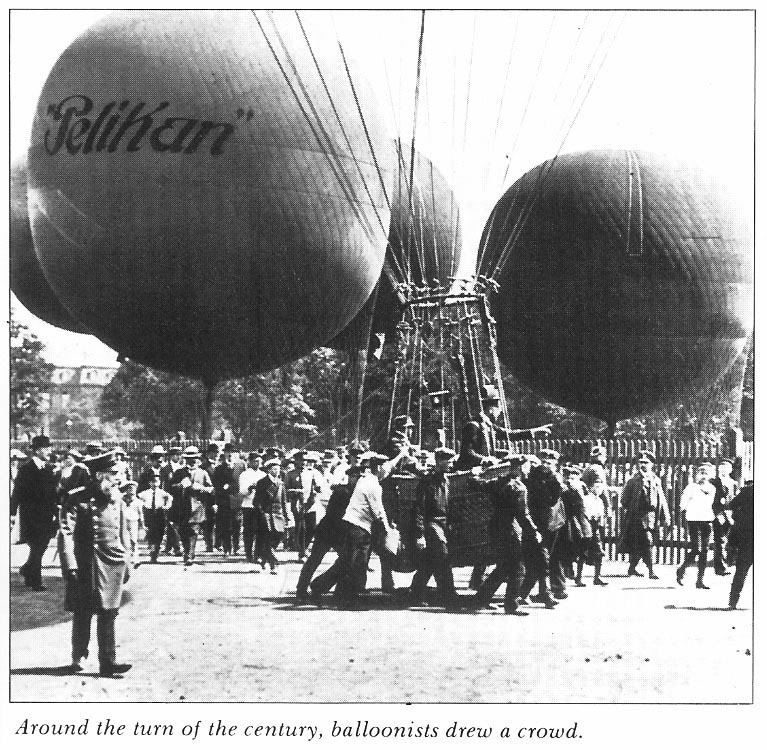
Pelikan balloonists, about 1910.
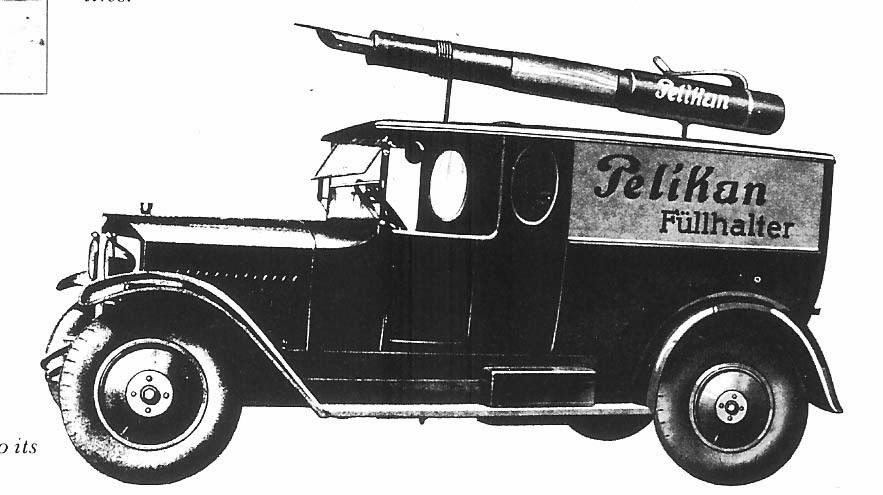
A Pelikan advertising car, about 1928, the year of the first Pelikan fountain pen.
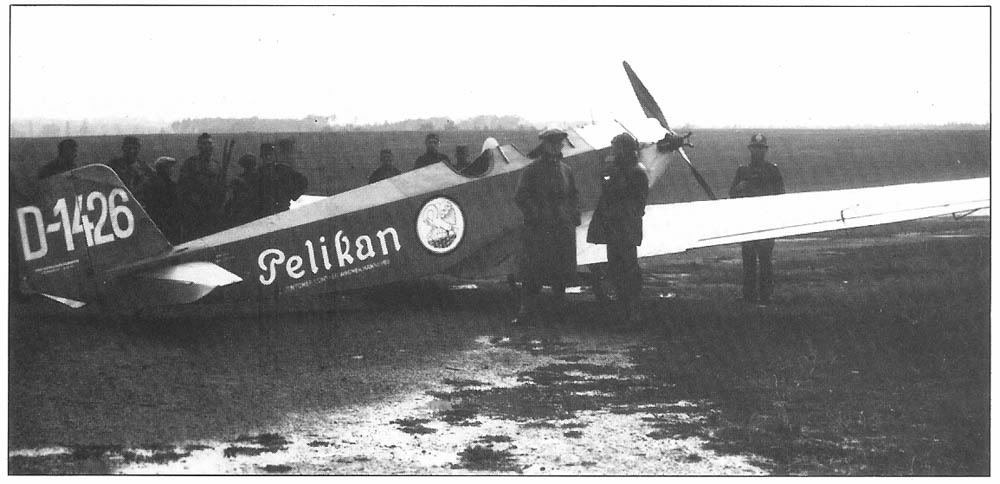
The Pelikan Klemm L20, from Geyer’s Collecting Writing Instruments.
The postcard
A few days ago my good friend Miroslav Tischler from Zagreb, Croatia, sent me an image of a postcard he recently acquired. It shows the same aircraft, the Pelikan Klemm L20, and I am finally able to see the lettering on the wings.
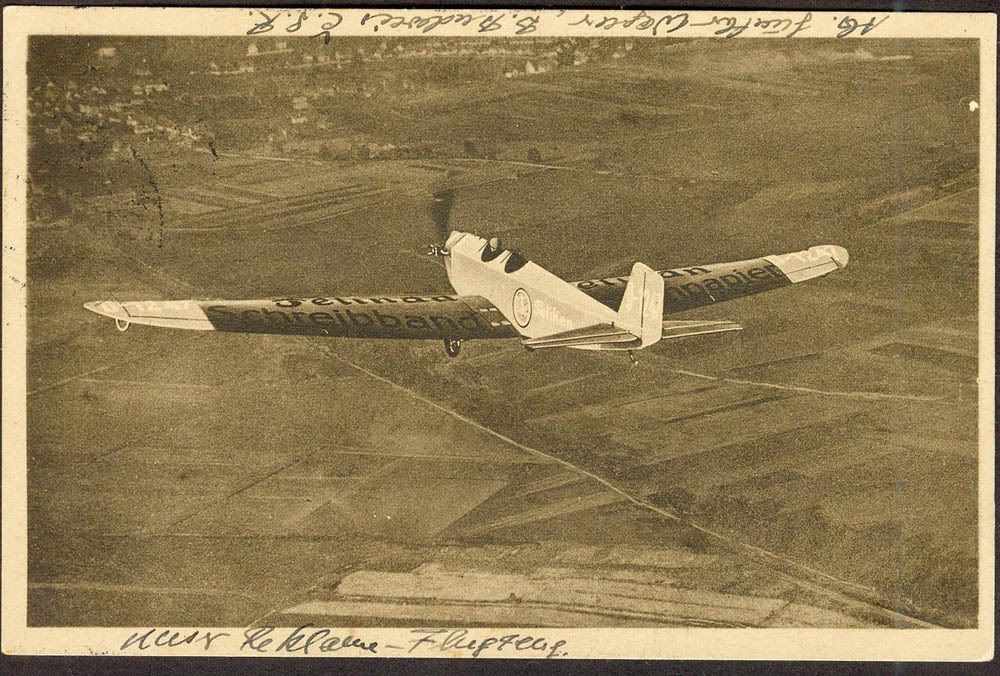
Miroslav Tischler’s postcard of the Pelikan Klemm L20 in flight. Written under the picture: “unser Reklame-Flugzeug” (our advertising aircraft). (Miroslav Tischler collection)
The left wing reads “Pelikan Schreibband.” The right wing reads “Pelikan” and, I believe, the word “Kohlepapier,” which pen collector Gerhard Brandl tells me means carbon paper, an office product Pelikan also made at that time. The lettering is also on the underside of the wings, so it could be read by people on the ground. Since this image is from 1928, I am surprised the decoration is not the company’s first fountain pen, which was introduced that year.
Here is the back of the postcard. I appeal to anyone who may be able to give me a translation; Miroslav, Gerhard and another friend are working on it for me too.
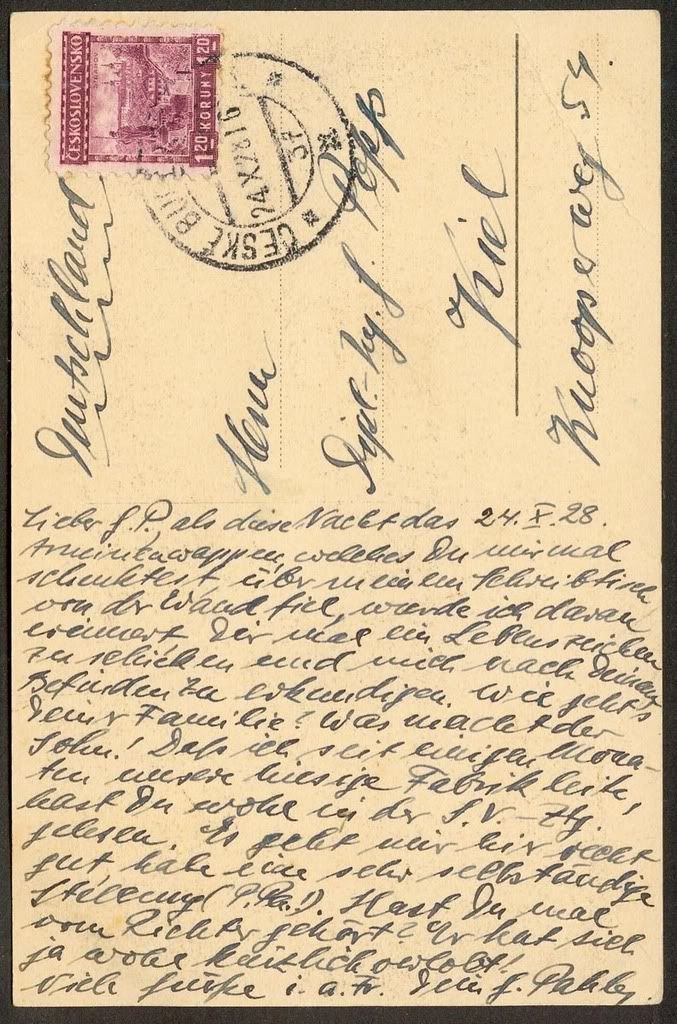
The back of the postcard, mailed from České Budějovice on Oct. 24, 1928, to G. Popp in Kiel. (Miroslav Tischler collection)
What the postcard says
Editor’s note, 2026: Len’s appeal can now be answered. The card is written in ordinary Latin script, not the old German Kurrent hand, and almost all of it can be read. Along the top edge of the front, upside down, the sender wrote “AG. Günther Wagner, B. Budweis, Č.S.R.”: the Pelikan company’s works at Böhmisch Budweis (České Budějovice), Czechoslovakia. Under the picture is “unser Reklame-Flugzeug,” our advertising aircraft. So the card was sent by someone who ran Pelikan’s own factory, proud of the company’s plane.
It carries a 1.20-koruna Czechoslovak stamp, is postmarked České Budějovice, Oct. 24, 1928, and is addressed to Herrn Dipl.-Ing. G. Popp, Knooper Weg 54, Kiel, Deutschland. The message, in German:
24. X. 28. Lieber G. P.! Als diese Nacht das Arminenwappen, welches Du mir mal schenktest, über meinem Schreibtisch von der Wand fiel, wurde ich daran erinnert, Dir mal ein Lebenszeichen zu schicken und mich nach Deinem Befinden zu erkundigen. Wie geht’s Deiner Familie? Was macht der Sohn? Dass ich seit einigen Monaten unsere hiesige Fabrik leite, hast Du wohl in der S.V.-Ztg. gelesen. Es geht mir hier recht gut, habe eine sehr selbständige Stellung (p.pa.!). Hast Du mal von Richter gehört? Er hat sich ja wohl kürzlich verlobt! Viele Grüße i. a. Fr. Dein G. Pahley
In English:
Oct. 24, 1928. Dear G. P.! Last night the Arminia coat of arms you once gave me fell off the wall above my desk, and it reminded me to send you a sign of life and ask how you are. How is your family? What is your son up to? You will probably have read in the S.V. newspaper that I have been running our factory here for a few months. Things are going quite well for me; I have a very independent position (with power of attorney!). Have you heard anything from Richter? I gather he got engaged recently! Best wishes, in old friendship, your G. Pahley
A few readings are less certain. The coat of arms is most likely that of a student fraternity called Arminia, which suggests the two men were at university together, as the “Dipl.-Ing.” (graduate engineer) on the address hints; “S.V.” would then be the fraternities’ association and its newspaper. “P.pa.” is per procura, the right to sign for the company. The signature’s surname is hard to make out: Pahley is the best reading. The capital G in both men’s initials is the same looped letter the writer uses for “Günther” on the front and “Grüße” in the sign-off.
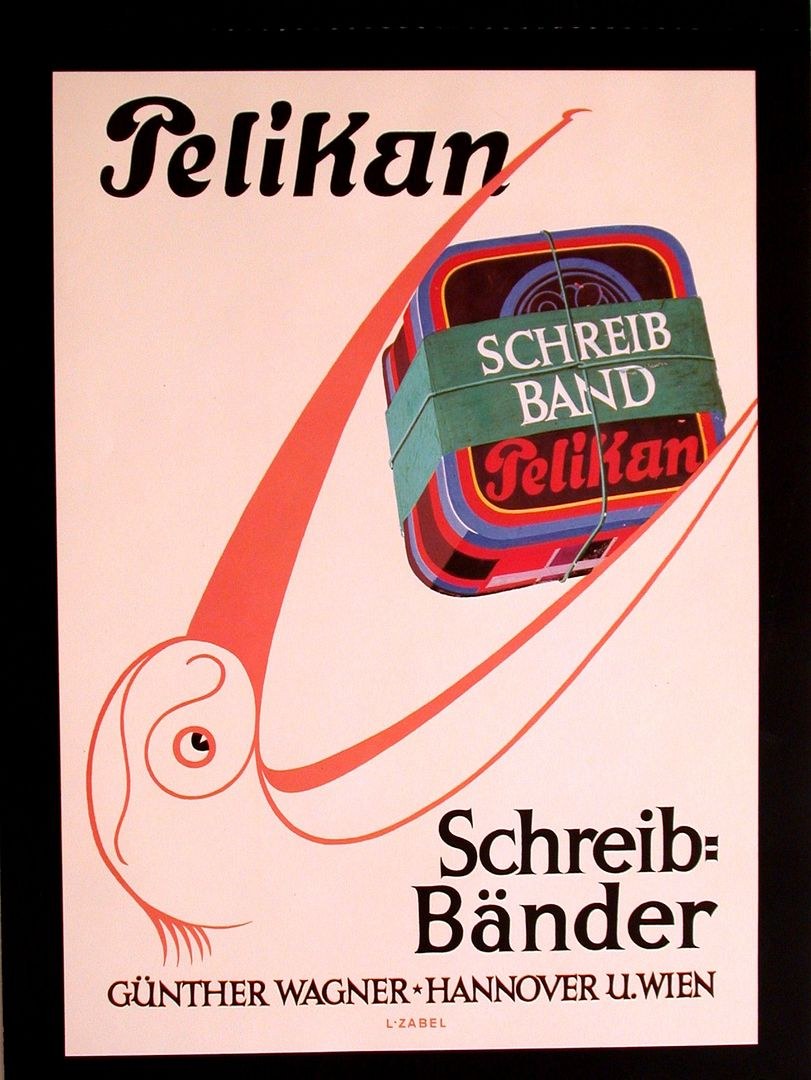
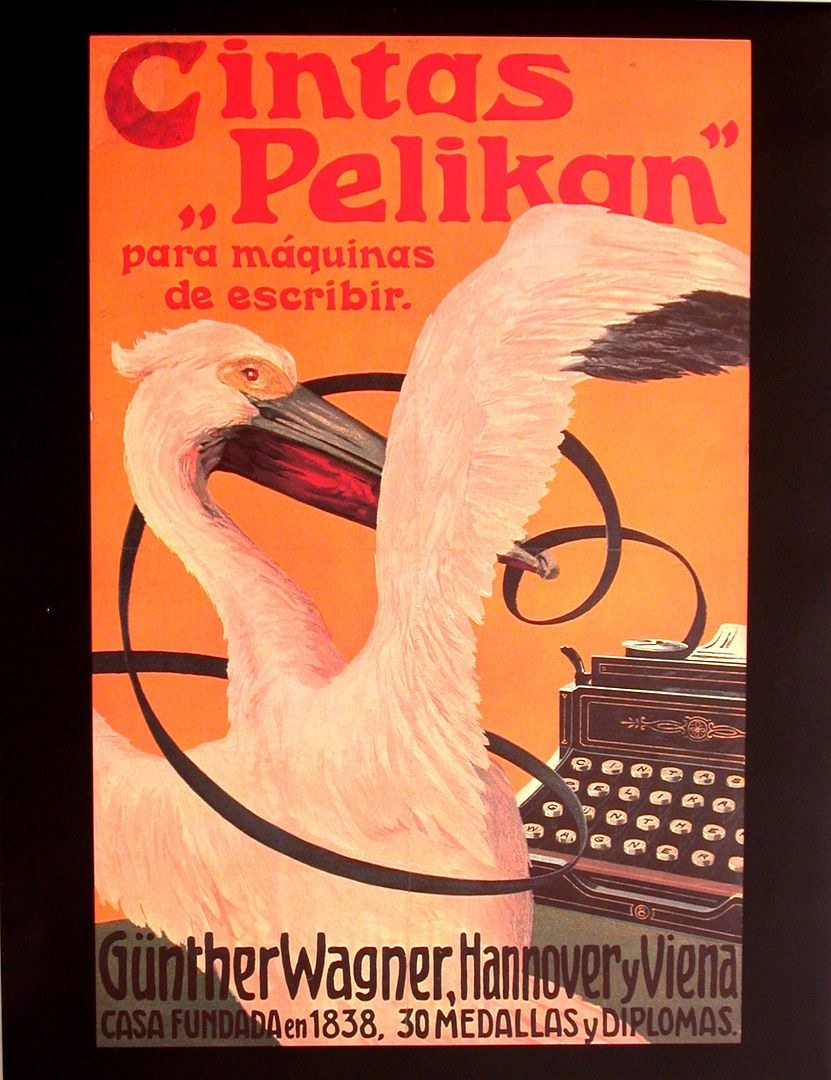
As for the wings, “Schreibband” is a typewriter ribbon, another Pelikan office product (one of the posters below advertises Pelikan Schreib-Bänder). Pelikan’s first fountain pen went on sale in 1929, after its piston-filling patent was granted in Germany in 1928; see When Was My Pelikan Made?
The Popp farm
Quite the coincidence, and slightly off topic, here is the closer connection to me…
The postcard is addressed to a person named Popp. Not far from where I live in Long Grove, Illinois, was a farm of about 300 acres, settled in the early 1860s by farmers and craftsmen from Alsace-Lorraine, who named the area Muttersholz after their former European home. Among the new settlers was the Popp family. The Popp farm lasted until about 1990, when the family retired and moved away. Three beautiful large barns sat there, made from hand-hewn white oak beams a foot to a foot and a half square. They looked like they were made yesterday, and I could still see the axe marks as fresh as the day they were shaped, almost 150 years ago.
The barn foundations were made entirely of local field stones. I found one smooth worked stone that happens to be a beautiful example of an early American Indian stone axe, and another nicely shaped ball with a depression that was used for grinding grain. I pulled out a few of these loose foundation stones as souvenirs, along with a few of the oak pegs that joined the massive beams, and they have a place of honor in my home. I appealed to the county that bought the land to sell me some of the oak beams to use in my home, but the reply was absolutely not; they had other plans.
Soon after this visit several local fire departments gathered. They torched two of the three barns and the original home, which quickly burned to the ground… before they could even practice with their firefighting equipment. A few days later I was able to enter and inspect the third barn. What a piece of history; I love old barns. The county bulldozed that barn to the ground, buried it in a big hole and rolled a big boulder over the top, like a gravestone, with a short inscription saying the site used to be the Popp Farm. The land was bulldozed to add a few more lakes for storm water retention, prairies, a small planted forest and hiking trails.
A few years later I met one of my son’s friends from college. His name was Popp. I mentioned the Popp farm nearby and he replied, “Yes, I heard about that from someone in the family. I don’t really know who the relatives were.”
I was very disappointed the young Mr. Popp had no interest in his early family history. Hopefully, altogether, this is an interesting story about a Pelikan powered glider and an Illinois farm.
© 2008 Len Provisor
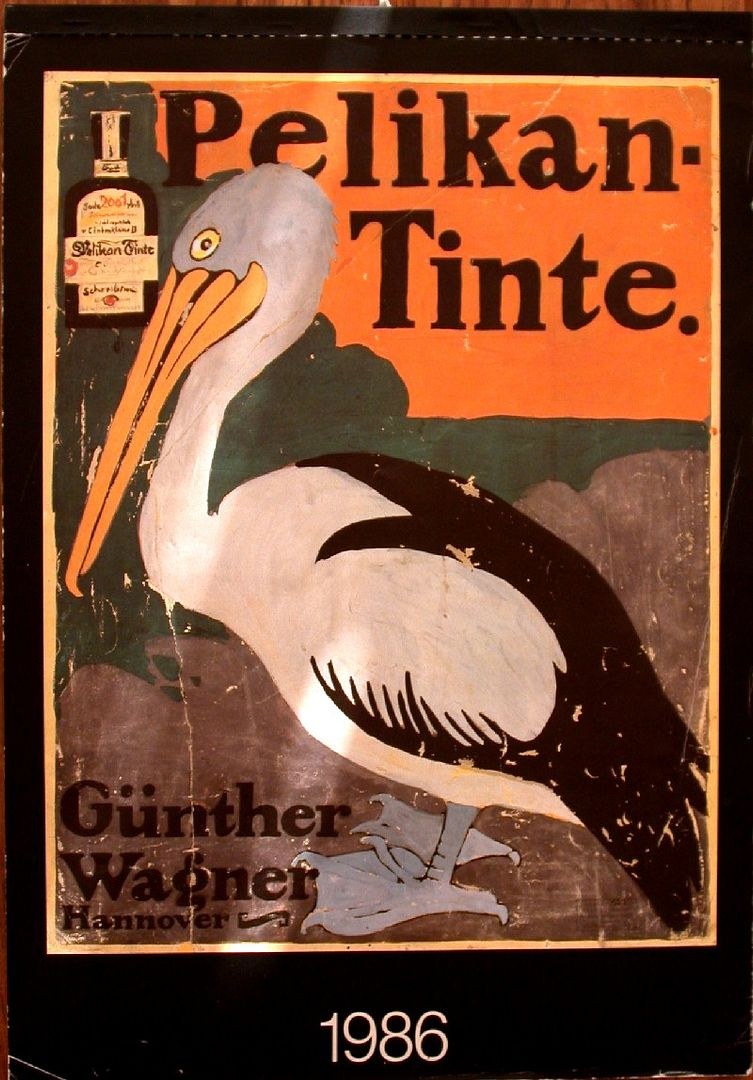
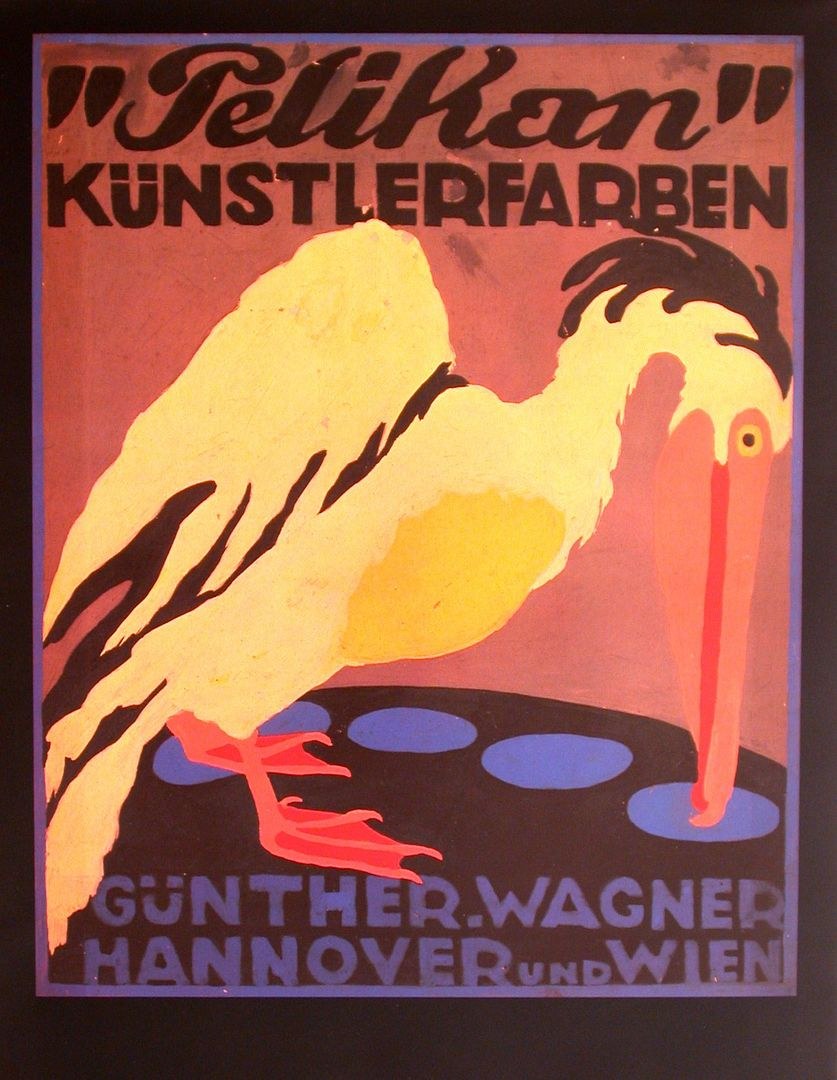
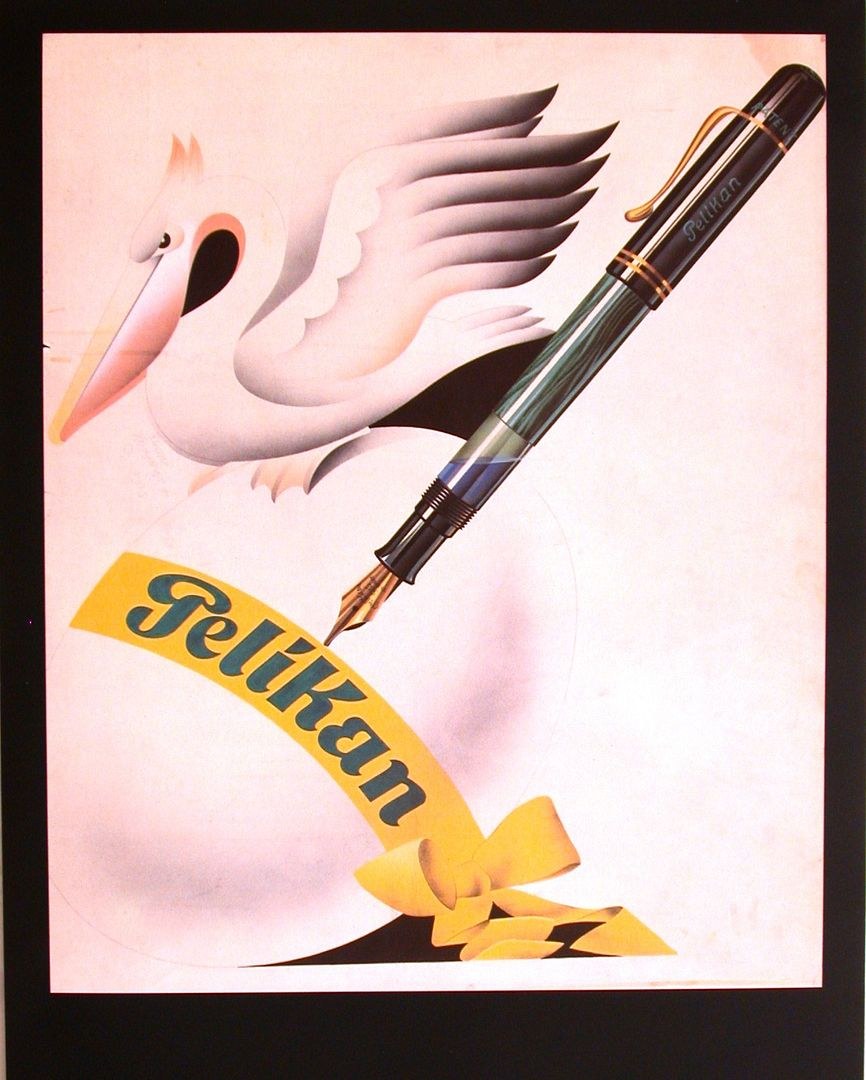
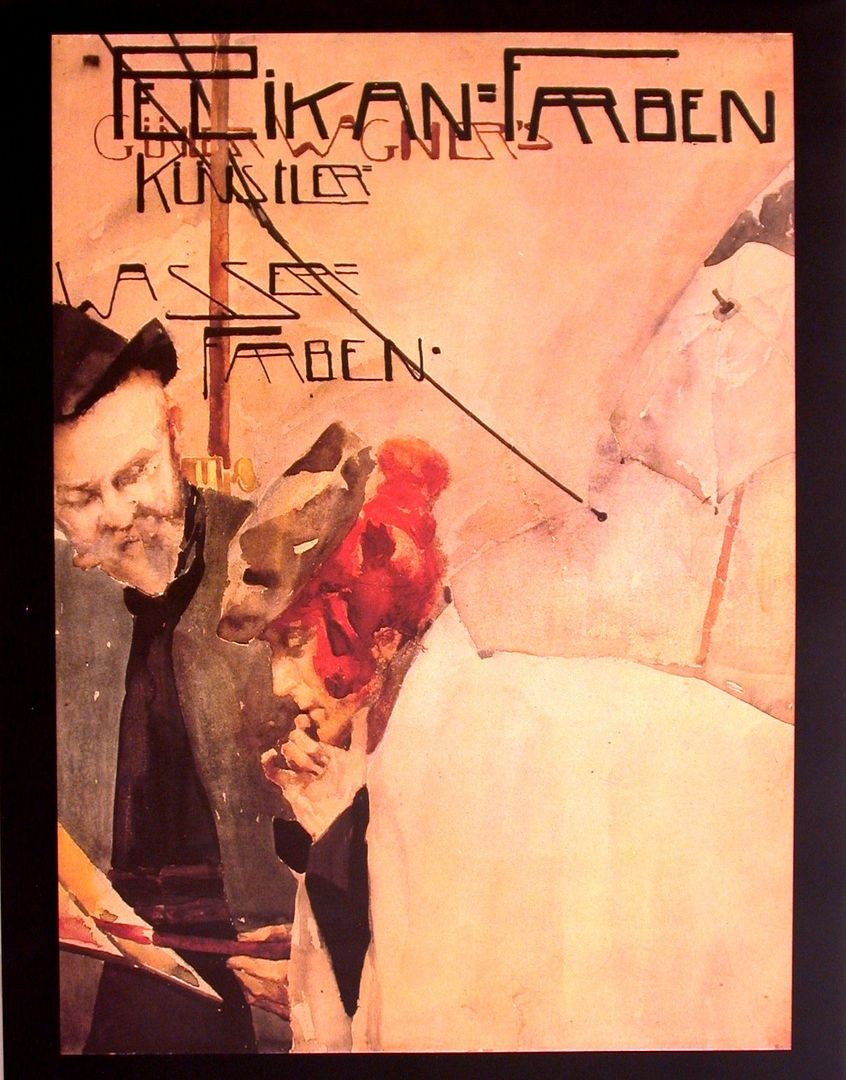
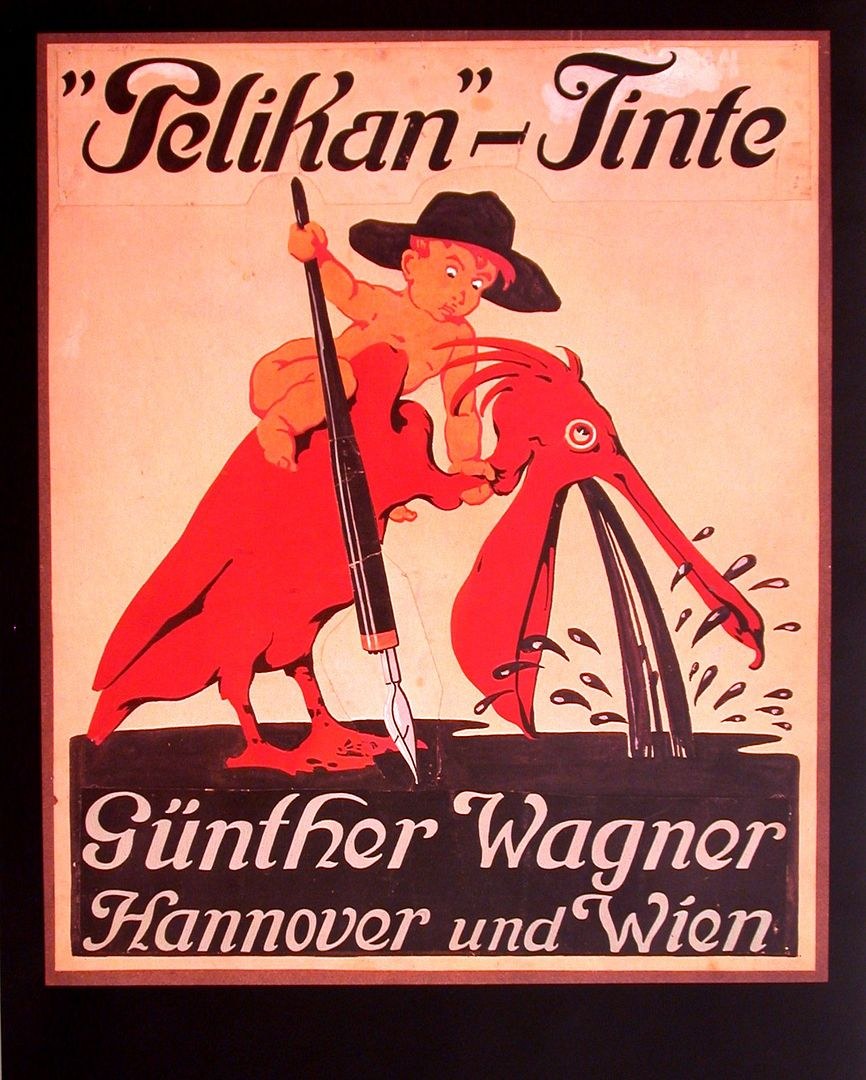
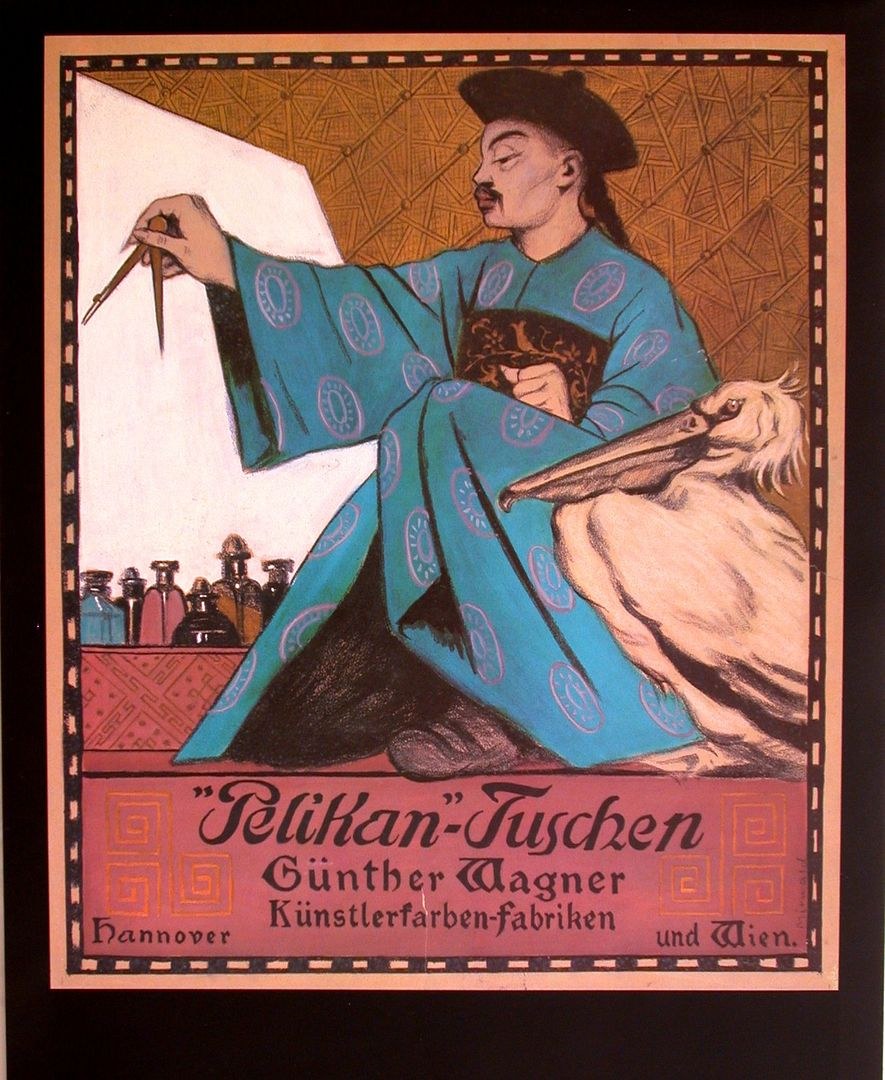
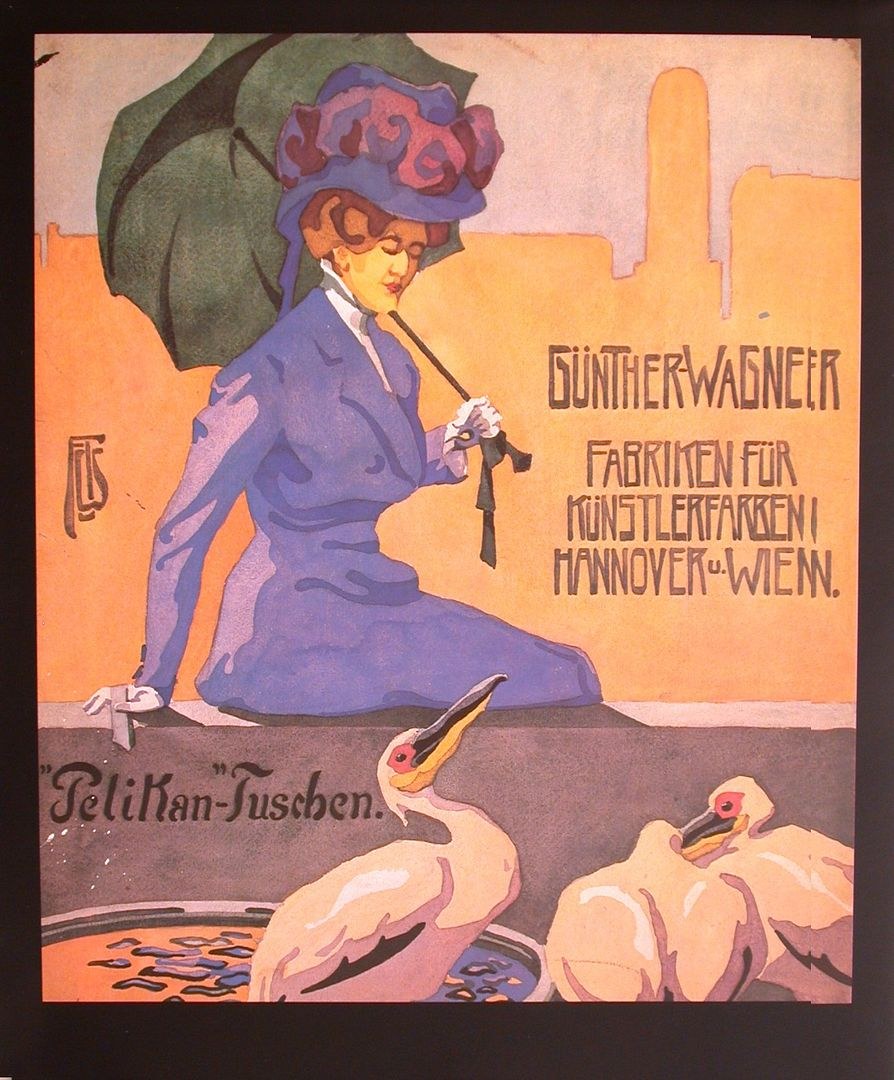
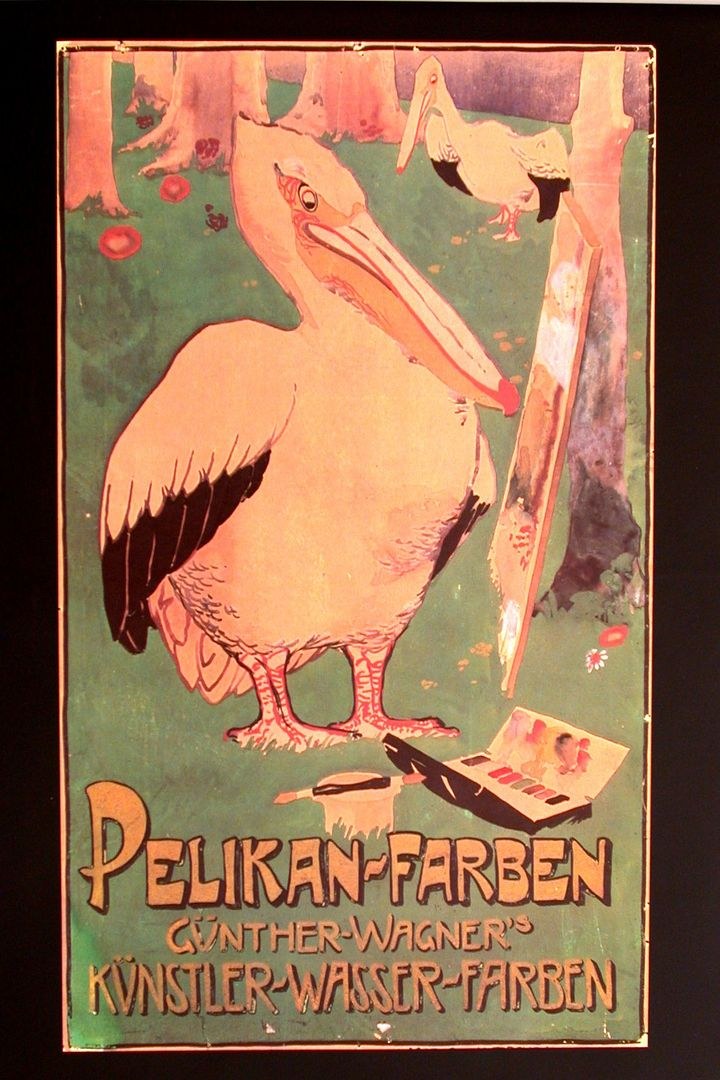
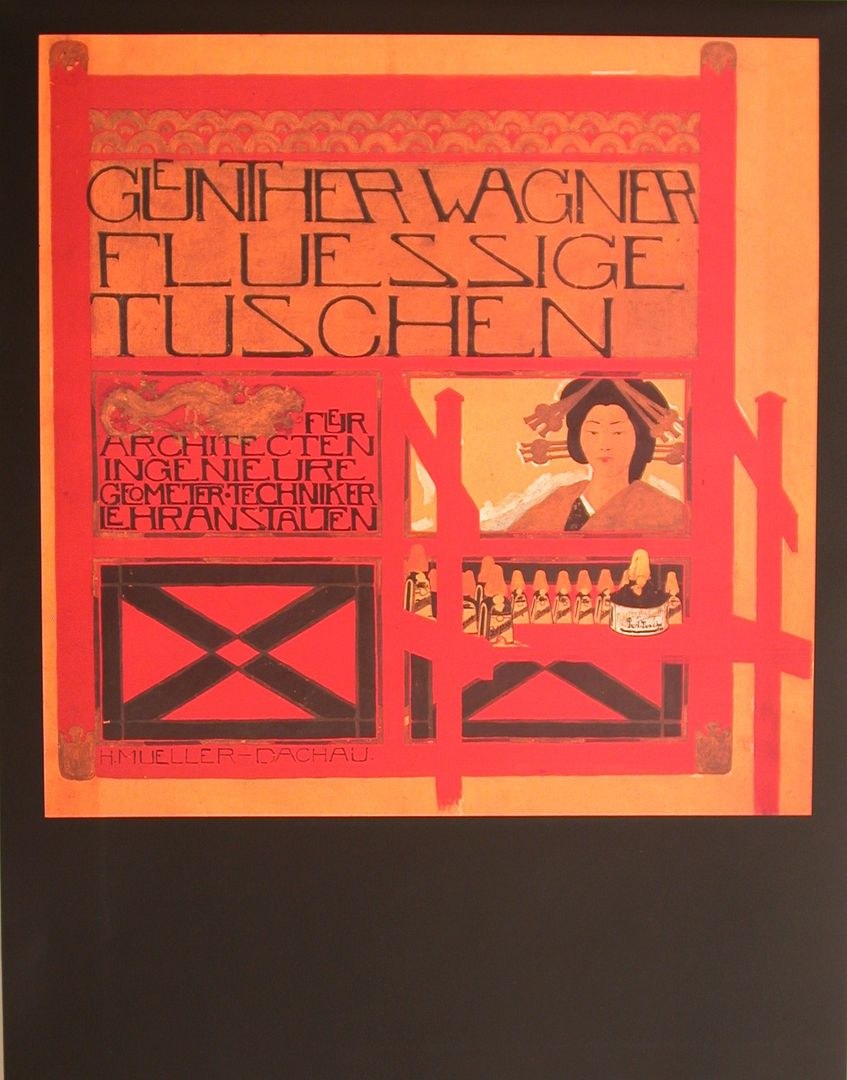
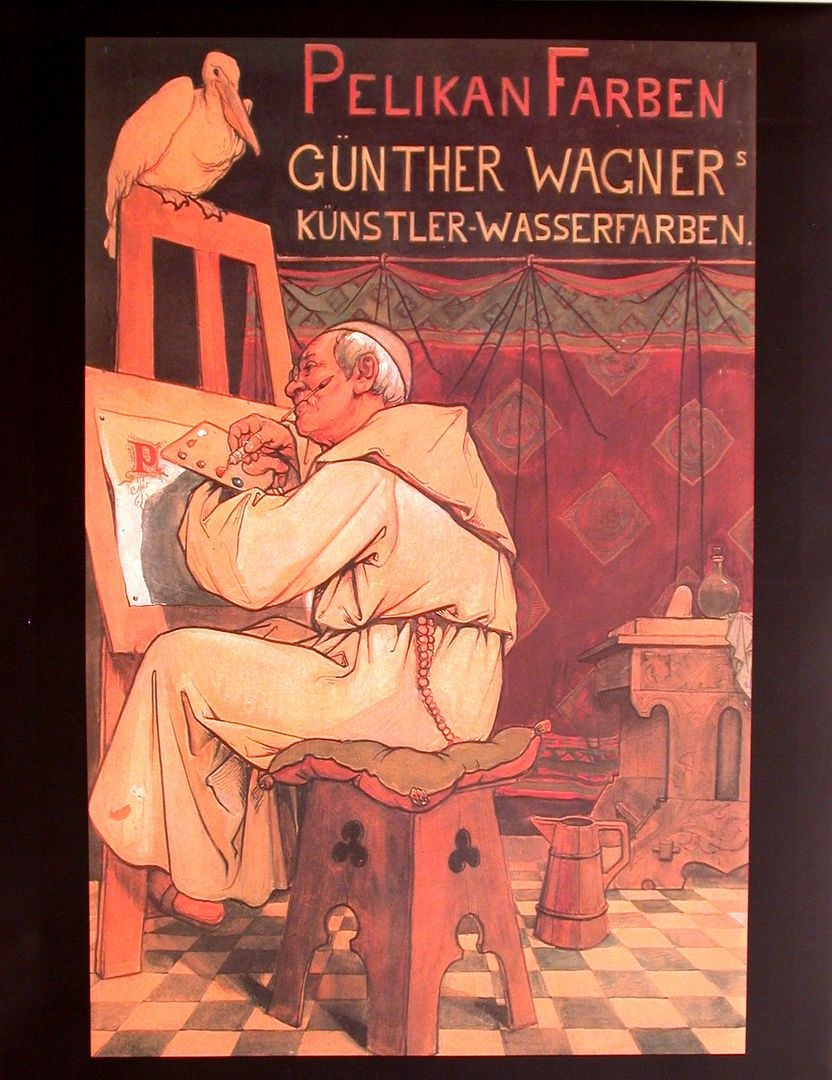
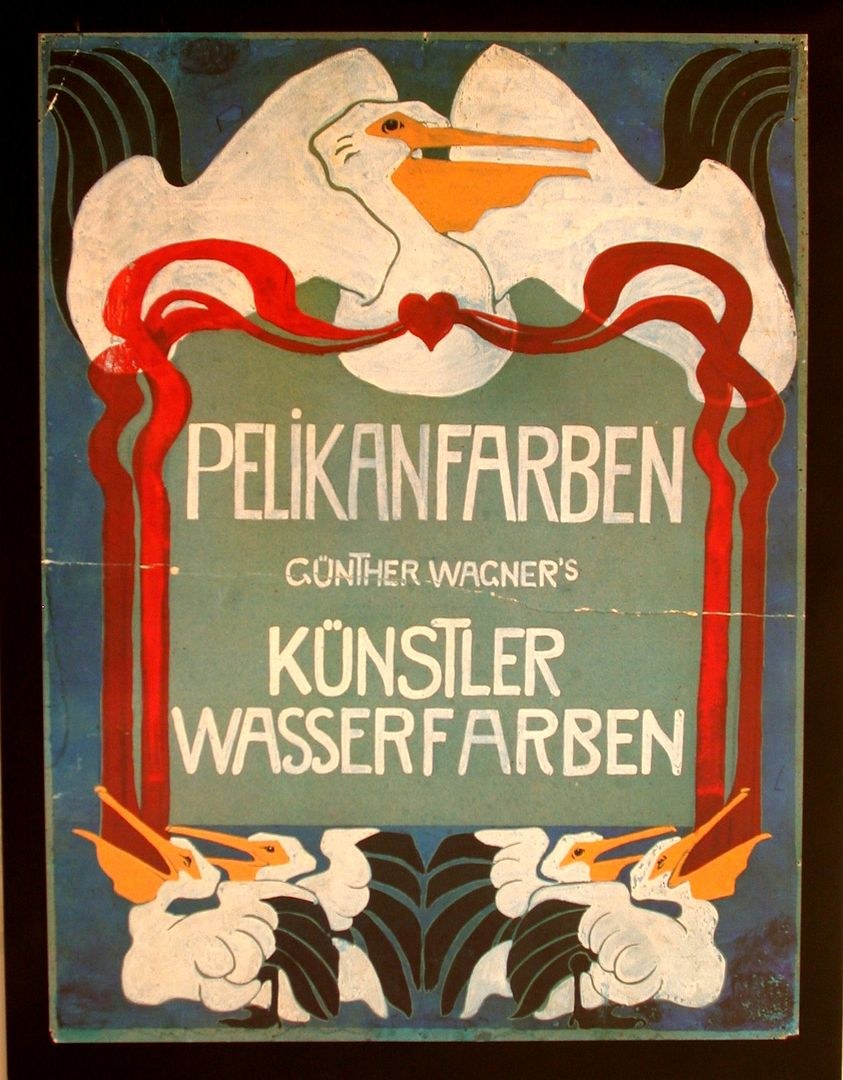
Günther Wagner Pelikan poster art, 1898–1930
I don’t have a Pelikan fountain pen collection, but I really like Pelikan’s advertising history.
Pelikan started out as a manufacturer of artists’ paints. Its first price list appeared on April 28, 1838, the date the firm was established. As early as 1900 the range was enlarged to include supplies for offices, such as inked ribbons, copying inks, stamp pads and adhesives. Later came the legendary black and green Pelikan fountain pen, which began its triumphal progress through the world. The pelican symbol is taken from the Günther Wagner family coat of arms.
There are many examples of the close association between Pelikan and the world of art. This collection of historical posters appears on a 1986 Pelikan wall calendar from my pen ephemera collection, and bears impressive witness to that tradition. The posters come from competitions held among painters and designers between 1898 and 1930. Many other beautiful posters were shown some years ago in a Pelikan postcard assortment, but I never scanned them.
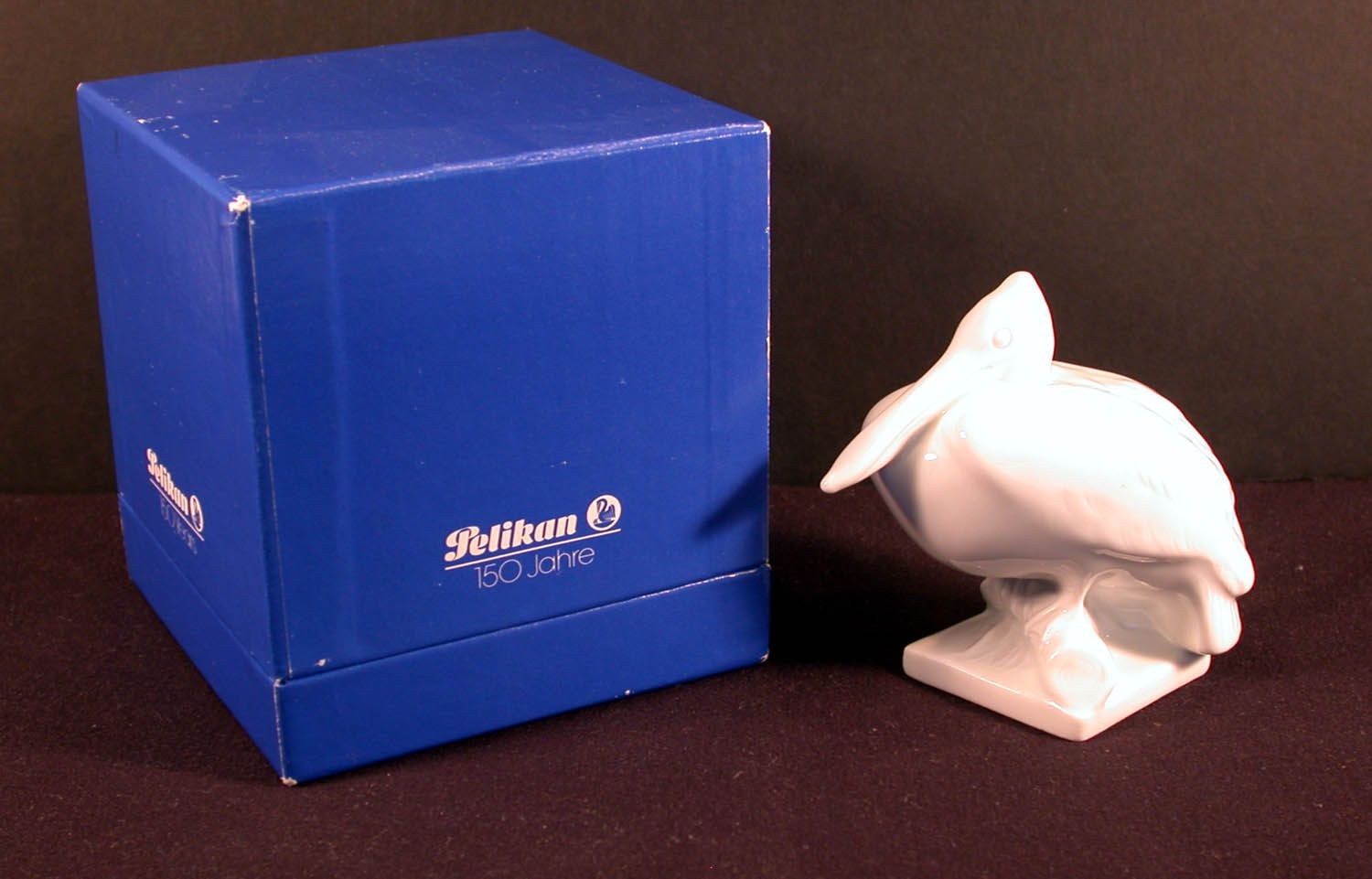
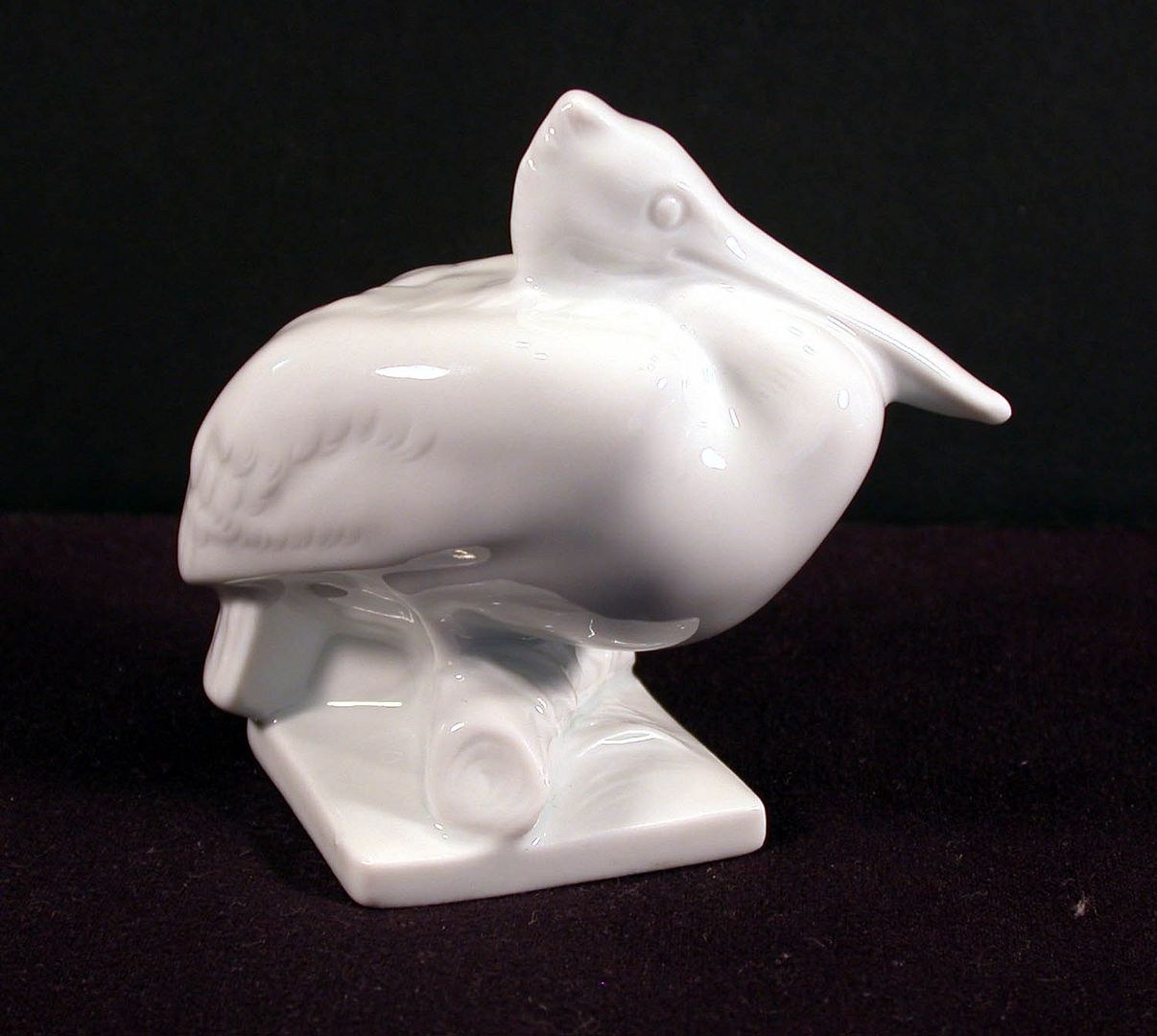
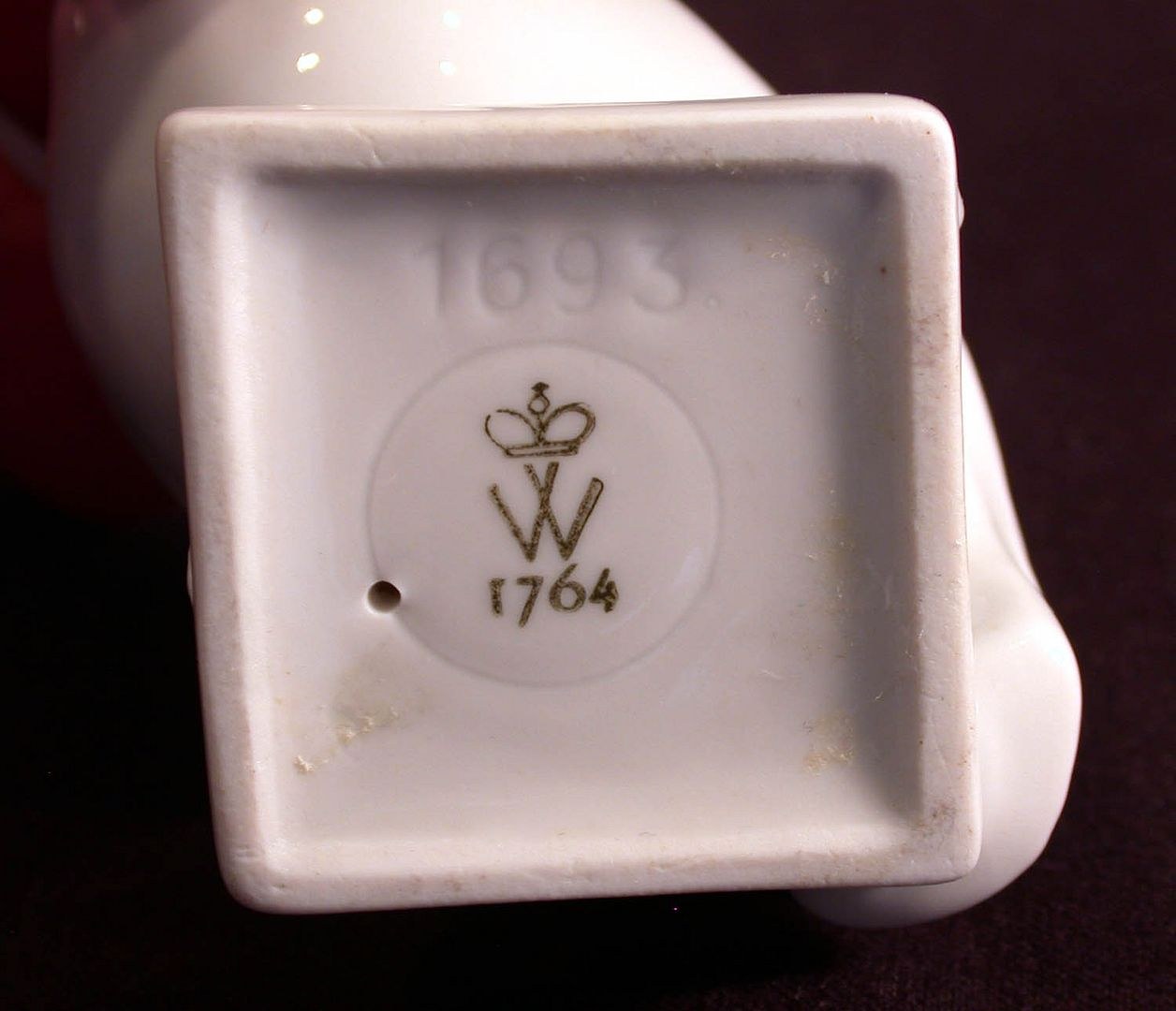
The last three photos show a Pelikan 150-year ceramic pelican, from the Wallendorf porcelain factory in Thuringia, Germany. The 1693 on its base is the mold number for the pelican.
The Posters and the Porcelain Pelican