

Windows
The beginnings of Maki-e pens
|
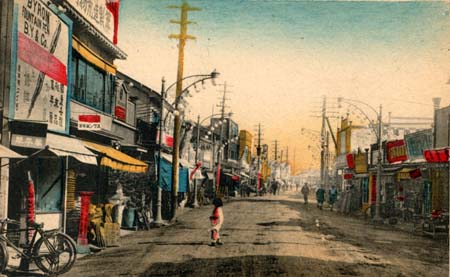
Store windows. Ebonite, invented by Charles Goodyear in 1839, is made of naturally occurring rubber mixed with sulphur and then heated or “vulcanized” The problem is the sulphur. Not all of the sulphur bonds during the process and as much as 40% is left “free”. Ultraviolet light will force the sulphur to combine with oxygen and this causes the discoloring. Also hydrogen and oxygen like to bond with sulphur. Thus if ebonite is exposed to water, either in the air as humidity or in liquid form, the surface will create a film of sulphuric acid on the pen which burns the pen and also discolors the surface.
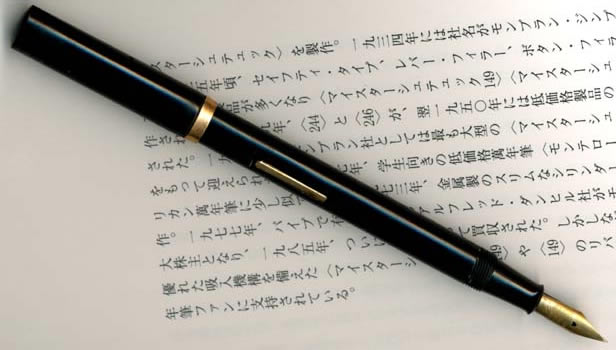
A Japanese window is the worst place in the world for a hard rubber pen. The air is hot and steamy in the summer, and the sun is always strong. A pen would generally last a week before it discolored to a point where it would need to be replaced. When the Pilot Salesman visited shops, trying to push more pens, they were constantly met with the same complaints. The shop owners were irritated at the number of pens wasted by displaying them in the windows and having to replace them as they discolored. They often used Dummy pens, pens made of wood and painted black to resemble the real pens, but these dummies were not as glossy as the real pens and sales would decrease. Pilot was well aware of the problem and they had been working on a solution. For years they had been trying to perfect the vulcanization process. They tried using more heat and pressure to minimize the free sulphur, but nothing seemed to work. In 1923 someone in the company had the idea to coat the pens with urushi lacquer. In the Tokyo Museum there were several pieces of ancient silver artwork that had been coated with this lacquer, and even after 800 years the silver hadn’t tarnished. If the lacquer worked for silver why not hard rubber? Pilot pen - 1923 lever filling Pilot pre-Laconite lacquer 2 The Pilot engineers quickly discovered that urushi lacquer was not easy to work. This lacquer comes from a tree that is closely related to poison ivy. The factory workers tried spraying and dipping techniques to coat the pens in mass production. This was a bad idea. They couldn’t get an even coat on the pens, and the poor workers were covered in rashes and swollen eyes. Some men were in such bad condition that they needed to be hospitalized. But the process seemed to work. The pens had an uneven surface and some shopkeepers complained about that, but after a week in the sun the pens still retained their luster. Pilot lost no time marketing these pens. They promised the shopkeepers that the pens would never discolor even if left in the sun, Guaranteed. This was unfortunate. The lacquer delayed the discoloration, but after a few months the pens would discolor just as before, and the shopkeepers demanded their money back. Pilot lost a lot of money on these pens. Today these 1923 Pilots are very hard to find and are very valuable to collectors.
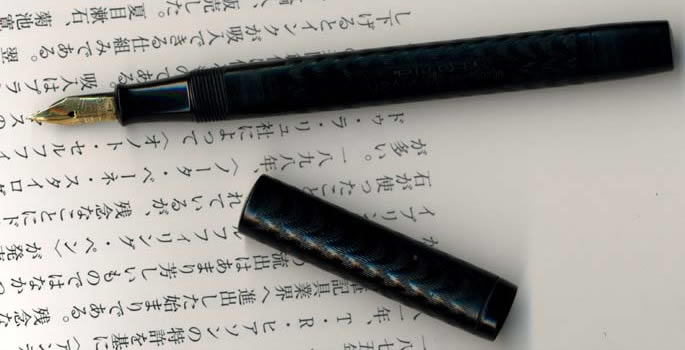
Pilot pen – 1926 Laconite finish 3 By 1925, after having rebuilt from the 1923 earthquake, Pilot finally solved the problem and sought to reap untold profits. The solution was to take the hard rubber stock and rotate it on a lathe at high speeds. Felt strips, saturated in urushi lacquer were pressed against the stock. The friction heated the stock and forced the lacquer deeper into the rubber’s pores, impregnating the stock with the lacquer and the resulting material turned out better than expected. Even after several months in the sun the pens did not lose their color. Pilot named the new material Laconite and secured patent in Japan, the U.S. and England. Pilot thought that the world would come rushing to them, wanting to license their invention. They were a little too late as other companies were starting to look at new celluloid and other plastic materials that were more colorful and easier to work.
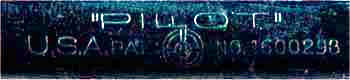
Pilot pen U.S. patent imprint for Laconite process 4 One company to take Laconite seriously was General Electric. The new material had an interesting characteristic: Laconite was a far better insulator than plain hard rubber, and GE licensed this for several years for telegraph insulators. Disappointed, Pilot looked at their lacquer pens and went a step further. They noted that their pens looked like all the other pens in the world, why should anyone in a foreign market notice them? Fortunately someone asked, “Why not use colored lacquer and traditional Japanese artwork?” The art of Maki-e had been around for centuries. It seemed like an obvious decision to apply the Maki-e artwork to pens. Sure, Pilot wouldn’t be able to mass produce pens this way, but some customers would pay more for the artwork. It was this simple idea that quickly launched Pilot as a major pen company. Many foreign companies wanted to hire Pilot’s artists to make Maki-e pens for them, but Pilot refused, they would not relinquish the name Namiki from their pens. Eventually Alfred Dunhill would compromise and use both the Namiki and Dunhill names on the pens for the exclusive rights to sell the pens abroad. The rest is history.
|
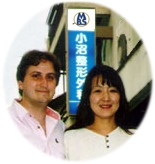 Ron
Dutcher has lived in Japan for over 15 years, where he owns and runs a small orthopedic
clinic with his wife, Keiko; which leads him to many Japanese pen finds. His patients,
once they learn of his pen hobby often give him pens as gifts or offer to sell
them to him. He is a member of the Tokyo Pen Association, and has learned a great
deal from Japanese pen collectors. He sells a great many Japanese pens on ebay
under the name Kamakura-Pens, but his true love is for early American pens. He
can be contacted at